.png)
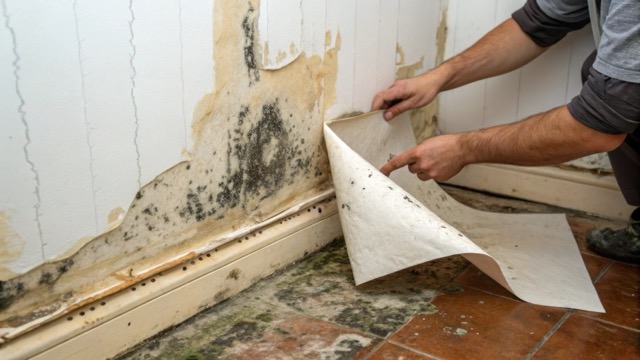
Mold Risk in West Jordan Homes(What the Dry Climate Doesn’t Prevent)
A lot of homeowners in West Jordan assume mold is more of a humid-climate problem.
That makes sense on the surface. Utah’s dry. The air is dry. The weather is dry for much of the year.
But that does not mean a home is protected from mold.
In fact, one of the reasons mold gets missed in West Jordan homes is because people assume the climate should prevent it. What actually matters more is not the outdoor climate. It is whether moisture gets trapped indoors and stays there long enough to create a problem.
That is where hidden mold starts.
Dry Air Does Not Stop Indoor Moisture Problems
A dry climate can help in some situations, but it does not cancel out what happens when water gets into the home.
If moisture is trapped behind a wall, under flooring, around a bathroom, near plumbing, or inside materials that do not dry properly, mold can still develop. It does not need the whole house to feel humid. It just needs the right pocket of moisture in the right place for long enough.
That is why dry weather can create a false sense of security.
Where Hidden Mold Tends to Show Up
One of the tricky things about mold is that it often grows where homeowners are not looking first.
In West Jordan homes, hidden mold risk is often higher in places like:
- Behind drywall after a leak
- Under flooring after water damage
- Around tubs, showers, and toilets
- Near older plumbing lines
- Inside cabinets under sinks
By the time mold becomes visible, the problem may already be bigger than it looked at the start.
Why Homeowners Miss It
Most hidden mold problems do not begin with a dramatic discovery.
It is usually something easier to brush off.
A room smells a little off.
Paint starts bubbling.
A patch of wall looks slightly stained.
The baseboard swells a little.
The same area seems damp again after you thought it dried out.
That is part of what makes hidden mold so frustrating. The signs can feel small right up until they do not.
The Dry Climate Misunderstanding
This is really the core issue.
People often assume:
No humidity = no mold risk
But mold in a home is usually tied more closely to:
- Past leaks
- Unresolved water damage
- Moisture trapped behind surfaces
- Plumbing issues
- Areas that never dried completely
That is why a dry climate does not always help as much as homeowners expect. If the moisture source is inside the house, the outside weather is not the main thing deciding the outcome.
When Mold Becomes a Bigger Problem
Hidden mold tends to get more expensive the longer it stays hidden.
What could have been a smaller issue can turn into:
- Damaged drywall
- Contaminated materials
- Stronger odor
- Moisture spreading farther
That is why the timeline matters. The earlier moisture problems are taken seriously, the better the chances of keeping the issue smaller and more contained.
Signs That Should Not Be Ignored
Not every smell or stain means mold, but certain signs deserve attention, especially if they keep coming back.
Watch for:
- Musty odors that do not go away
- Staining or discoloration on walls or ceilings
- Peeling or bubbling paint
- Warped trim or baseboards
- Visible signs of past water damage
Those are often the kinds of clues that lead to mold removal or mold remediation once the real source is found.
Why Water History Matters More Than Weather
If a home has had a leak, overflow, seepage issue, roof problem, or any kind of water damage, that matters more than the dry climate outside.
That history is often what shapes the mold risk.
A home in West Jordan can still end up with mold if:
- A bathroom leak was not fully dried
- Water got behind a wall
- A plumbing issue lingered too long
- Moisture returned to the same area more than once
That is what homeowners should pay attention to. Not just the climate, but the moisture story inside the home.
Mold Remediation vs. Waiting It Out
This is another place homeowners lose time.
If the area seems mostly dry now, it is tempting to wait and see. But hidden mold problems usually do not get simpler with time. They get larger, more embedded, and harder to contain.
That is why mold remediation in West Jordan is often connected to finding what is behind the visible symptoms, not just cleaning what shows up on the surface.
And if affected materials are already contaminated, mold removal may be part of getting the home back to a cleaner, safer condition.
Bottom Line for West Jordan Homeowners
A dry climate does not make a home mold-proof.
In West Jordan, hidden mold risk usually comes down to trapped indoor moisture, unresolved leaks, and materials that never dried the way they should have. That is why small warning signs matter, especially after any kind of water issue.
If something smells musty, looks swollen, keeps staining, or never quite feels dry, it is worth taking seriously. In many cases, that is the stage where a smaller moisture issue can still be addressed before it becomes a larger mold remediation or mold removal problem.